
Video: When churches burn
A Chin commander shares how military strikes on Christian buildings serve a purpose beyond religious hatred.

The Myanmar military destroys churches — a practice well documented over decades.
While regime leader Min Aung Hlaing styles himself as Buddhism’s defender — even building the world’s largest sitting Buddha in Naypyidaw — his forces systematically target religious buildings, especially those of minority faiths.
In Chin state’s Falam, I saw the aftermath of recent military airstrikes that struck two churches and the village leader’s home. The villagers escaped just in time after the first bomb missed its mark. Now they shelter in forests or beneath concrete bridges, seeking protection from night raids.
Their village — with its blue and pink stilted homes and gardens bright with mustard leaf and bitter gourd — stands abandoned and silent.
Stood on the twisted metal ruins of a Baptist church, resistance commander Biak Run Thang offered a theory into why the regime attacks churches — one that went beyond Buddhist chauvinism.
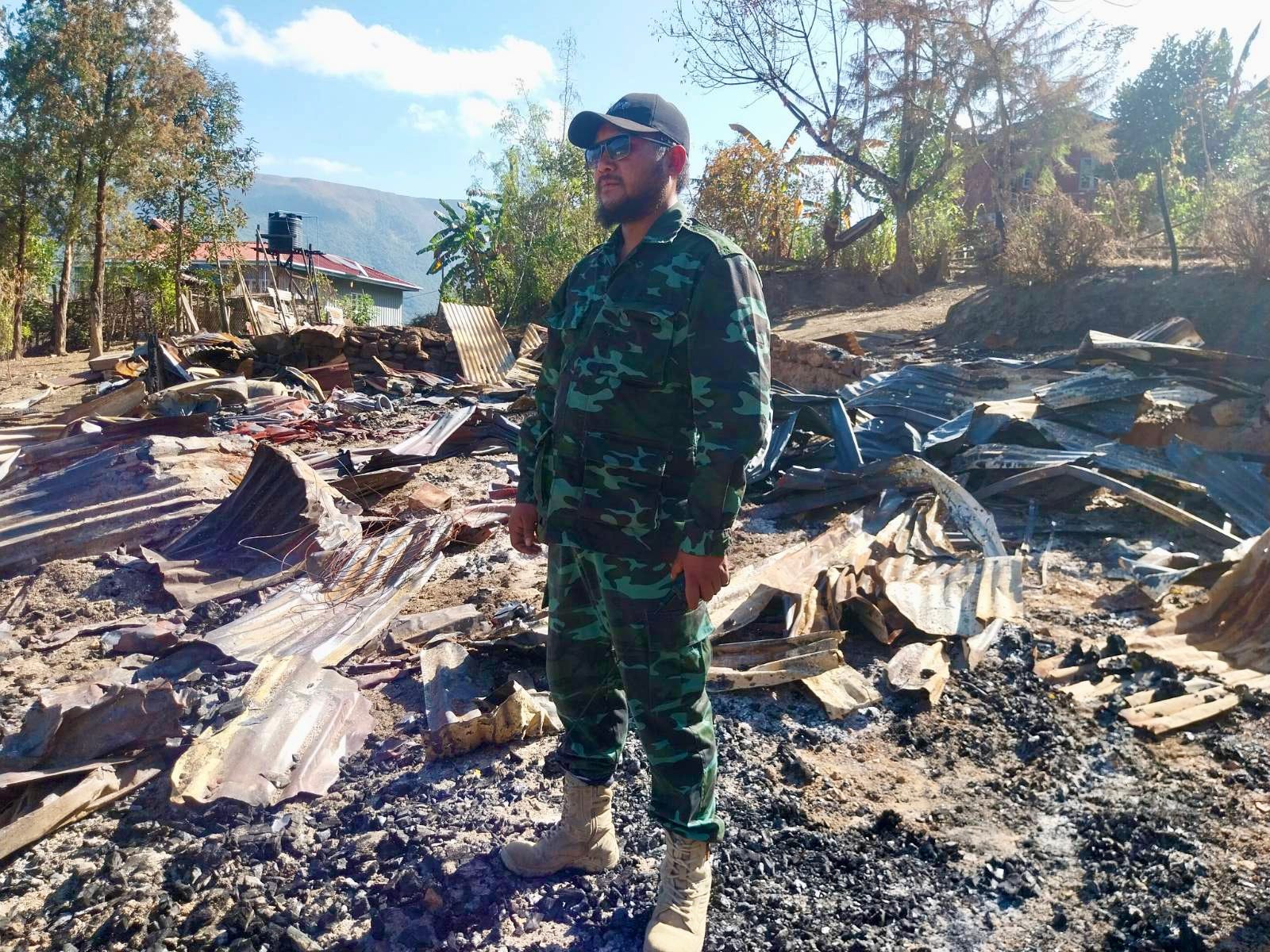
“They always target churches, everywhere. They could have hit our base instead,” he told me.
Chin state, like several other Myanmar border areas, has a large Christian population.
Yet he points out that many of his fellow resistance fighters are Bamar Buddhists, and the military doesn’t spare pagodas in the central drylands either.
“Obviously, they show less respect for Christian buildings,” he said.
But he sees a calculated strategy at work: when churches burn, villagers sometimes blame the Chin resistance for drawing military attacks — precisely the division the regime hopes to create.
Here’s a short clip of the lesser-damaged church in the village.
