
Message from a frontline commander
A PDF commander’s take on what’s broken and how the resistance can still prevail.

Last week, a seasoned commander in Myanmar’s armed resistance shared his assessment of the revolution’s current state. Years on the ground have sharpened his insights (he’s a bit older than Gen Z). Given the sensitivities of his position on the frontlines, I’ll call him Kin Maw.
When I asked permission to edit and publish his message, he agreed. It’s partly why I started this Substack: to amplify voices from the ground. What I like about hearing from fighters like Kin Maw is the absence of bluster – just a straightforward account from someone who’s there.
Kin Maw joins a growing chorus calling for reform of the National Unity Government, as patience wears thin with the shadow administration and urgency mounts. If anyone from the NUG or their supporters feels his critique is unfair, I welcome your response – send me your thoughts and I’ll publish them.
A disclaimer: these are Kin Maw’s views, not mine. And given he’s been fighting since the coup, his perspective carries more weight anyway.
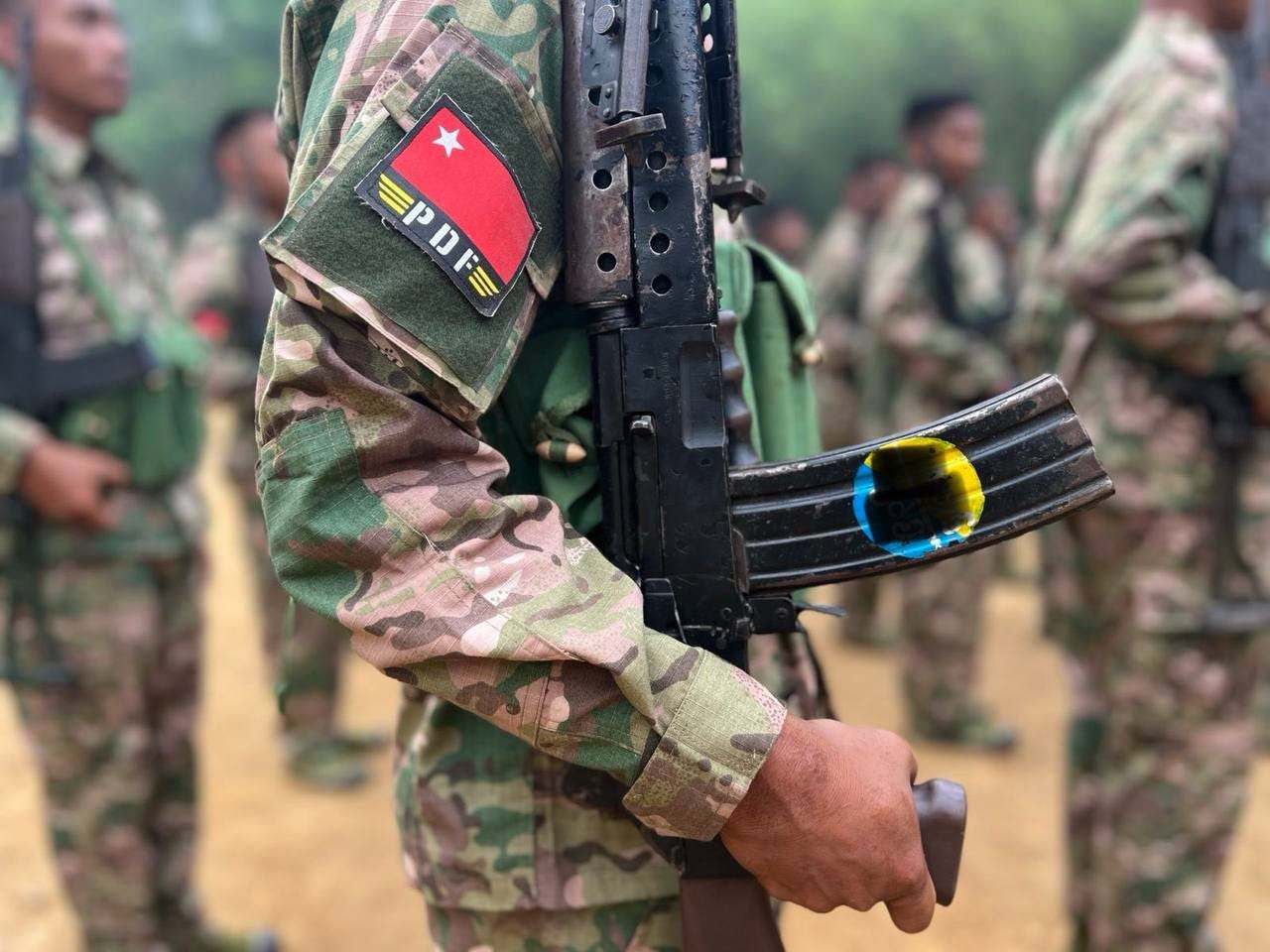
Kin Maw, senior commander in the People’s Defense Force:
Some say the Spring Revolution is over. Others think the military is finished. For the revolution’s slowdown, many blame extremely weak leadership – and that’s certainly played a role. We can talk about the weak leadership endlessly.
The NUG talks about reform but takes no real action. Those calling for genuine change get criticized. Why does the NUG lack self-reflection? Here’s the real question: Will we just sit around complaining, or will young people with vision step up and take responsibility?
Complaining won’t bring change. And to those claiming to serve the people – help the youth succeed. If you’re holding positions meant to serve the revolution but can’t contribute, you’re mirroring the structure we’re trying to change. Step down.
Have We Really Lost?
Most of us didn’t enter this revolution thinking we’d already won. We’re creating the change. We’re fighting not only the military but also Russia and China (and contending with some other Asian countries). The enemy has deliberately sowed distrust among us to maintain control. If we can’t overcome these divisions, how can we transform Myanmar?
This new generation has already damaged the dictatorship significantly. Though the regime has regained ground with modern weapons, new tactics, foreign support, and forced conscription, their losses remain substantial. Maintaining large offensives are costly and probably unsustainable for them. Now we must adapt our tactics to fight an enemy with superior equipment.
Look at history: North Vietnam beat the United States. Think of Syria, Algeria, Afghanistan. We must adapt to modern warfare. The military is expanding rapidly, but quality and capability remain low. They rule through oppression, not governance, and they’re destroying the economy they depend on.
Internal Military Tensions
Min Aung Hlaing is playing a dangerous game internally. He’s moving potential rivals into powerless Union Solidarity and Development Party positions, keeping real military power for himself and his coterie. This breeds distrust within the army and, less significantly, resentment among USDP politicians who’ve waited years for relevance only to be pushed aside just before the sham election.
Recent military gains should push revolutionary groups to adjust their operations. The NUG has ignored resistance groups and acted unilaterally – but instead of letting them self-destruct, we must pressure them to cooperate with resistance forces and ethnic armed groups. They need to abandon dreams of controlling a future government and focus on genuine liberation. The NUG still represents hope for many and remains a unifying symbol, including for communities abroad.
Strategic Advantages We Must Use
We need to keep supporters motivated and push forward together. Our forces being scattered across Myanmar is actually an advantage. If we gathered in one place, the enemy could concentrate forces and crush us. Strategic coordination across multiple locations prevents this.
Ethnic forces and revolutionary groups are active along most land borders. If we establish a connected route through these border areas, even China can’t easily pressure groups near their territory. The Kachin and Shan wouldn’t need to rely on central region resources – they could access new markets. We could transport weapons and medicine east, west, south, and north, supporting forces in central regions.
New Tactics
We need to improve our fighters’ quality, discipline, and capability. We must not wait for enemy attacks. Instead, create mobile attack units that force the enemy to spread out and defend their own positions, draining their ammunition and stretching their forces.
While keeping the enemy busy protecting major bases, we cut their trade and economic routes. Disrupt their basic resources – electricity, energy, communications. Force them to operate in small, isolated groups.
China has interfered in our affairs for too long. We need to show them there are consequences, making them reconsider backing the military council. If China’s interests are threatened, they’ll pressure the regime to protect those interests, further dispersing enemy forces and increasing internal military tensions – many within the ranks already resent Min Aung Hlaing’s subservience to Beijing.
All this is how we move forward.